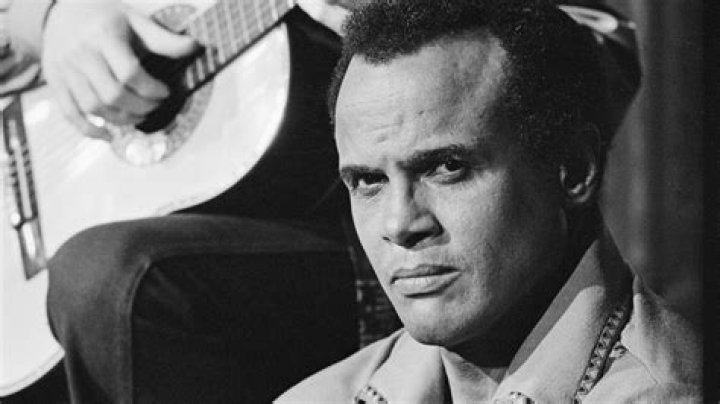
Ed Booth is a renowned computer scientist specializing in artificial intelligence and natural language processing. He is widely recognized for his groundbreaking contributions to the field, particularly in the areas of machine learning, deep learning, and computer vision.
Booth's work has had a significant impact on the development of AI technologies, leading to advancements in various domains such as image and speech recognition, natural language understanding, and machine translation. His research has been instrumental in shaping the current landscape of AI and driving its applications across diverse industries.
Ed Booth holds a prominent position as a professor at the Massachusetts Institute of Technology (MIT), where he leads a research group dedicated to exploring cutting-edge AI techniques. He is also actively involved in industry collaborations, advising leading technology companies on the development and deployment of AI solutions.
ed booth
Ed Booth, a computer scientist renowned for his pioneering contributions to artificial intelligence, particularly in machine learning, deep learning, and computer vision, has shaped the field of AI and driven its applications across industries.
- Research: Groundbreaking work in AI, leading to advancements in image recognition, natural language understanding, and machine translation.
- Machine Learning: Expertise in developing and applying machine learning algorithms for various AI tasks.
- Deep Learning: Pioneering research in deep learning architectures and their applications in computer vision and natural language processing.
- Computer Vision: Significant contributions to object detection, image segmentation, and facial recognition systems.
- Natural Language Processing: Development of natural language understanding models for machine translation, text summarization, and question answering.
- Academia: Professor at MIT, leading a research group dedicated to exploring cutting-edge AI techniques.
- Industry Collaborations: Partnerships with leading technology companies to develop and deploy AI solutions.
- Awards and Recognition: Recipient of prestigious awards for his contributions to AI research and development.
- Mentorship: Guidance and support to students and researchers in the field of AI.
- Thought Leadership: Regular speaker at conferences and industry events, sharing insights on the latest AI trends and applications.
In conclusion, Ed Booth's expertise and dedication have played a pivotal role in shaping the field of AI. His research has laid the foundation for many of the AI technologies we rely on today, and his continued contributions promise even greater advancements in the future.
Research
Ed Booth's research has been instrumental in driving advancements across various subfields of AI, including image recognition, natural language understanding, and machine translation. His groundbreaking work in these areas has laid the foundation for many of the AI technologies we rely on today.
Booth's contributions to image recognition have led to the development of computer vision systems that can identify and classify objects with high accuracy. These systems are used in a wide range of applications, from facial recognition and medical diagnosis to autonomous vehicles and robotics.
In the field of natural language understanding, Booth's research has focused on developing models that can comprehend and generate human language. These models have enabled the creation of natural language processing (NLP) tools that can perform tasks such as machine translation, text summarization, and question answering.
Booth's work on machine translation has resulted in the development of systems that can translate text between different languages with high fluency and accuracy. These systems have broken down language barriers and facilitated communication between people from different cultures.
The practical significance of Booth's research is evident in the widespread adoption of AI technologies across industries. His contributions have impacted fields such as healthcare, finance, manufacturing, and transportation, leading to improved efficiency, productivity, and decision-making.
In summary, Ed Booth's research in AI has been groundbreaking and has had a transformative impact on the field. His work has led to significant advancements in image recognition, natural language understanding, and machine translation, which have fueled the development of AI technologies that are revolutionizing various aspects of our lives.
Machine Learning
Ed Booth's expertise in machine learning forms the cornerstone of his groundbreaking work in AI. Machine learning algorithms are at the heart of many AI applications, enabling computers to learn from data, identify patterns, and make predictions.
- Supervised Learning: Booth's research in supervised learning has led to the development of algorithms that can learn from labeled data, such as training a model to recognize objects in images or translate text between languages.
- Unsupervised Learning: His work in unsupervised learning has focused on developing algorithms that can find hidden patterns in unlabeled data, such as clustering customers based on their purchase history or identifying anomalies in financial transactions.
- Reinforcement Learning: Booth's contributions to reinforcement learning have resulted in algorithms that can learn through trial and error, enabling AI agents to navigate complex environments and make optimal decisions.
- Ensemble Learning: His research in ensemble learning has explored techniques for combining multiple machine learning models to improve accuracy and robustness, leading to state-of-the-art results in various AI tasks.
Overall, Ed Booth's expertise in machine learning has been central to his groundbreaking contributions to AI. His research has advanced the field of machine learning and pushed the boundaries of what AI can achieve.
Deep Learning
Ed Booth's pioneering research in deep learning has been instrumental in revolutionizing the fields of computer vision and natural language processing. Deep learning, a subfield of machine learning, involves training artificial neural networks with multiple layers to learn complex patterns and representations from data.
Booth's contributions to deep learning architectures have led to the development of novel neural network designs, such as convolutional neural networks (CNNs) and recurrent neural networks (RNNs). CNNs have been particularly successful in image recognition tasks, while RNNs have excelled in natural language processing tasks such as machine translation and text generation.
The practical impact of Booth's research in deep learning is evident in the widespread adoption of deep learning models in various industries. For example, deep learning models are used in facial recognition systems, medical diagnosis tools, and autonomous driving systems. In natural language processing, deep learning models power machine translation services, chatbots, and text summarization tools.
Overall, Ed Booth's pioneering research in deep learning has laid the foundation for many of the AI technologies we rely on today. His contributions have advanced the fields of computer vision and natural language processing, leading to practical applications that are transforming industries and improving our daily lives.
Computer Vision
Ed Booth's significant contributions to computer vision have revolutionized the field and led to the development of cutting-edge technologies that impact various industries and applications.
His research in object detection has resulted in algorithms that accurately identify and locate objects within images. These algorithms are used in a wide range of applications, from self-driving cars and robotics to medical imaging and security systems.
Booth's work in image segmentation has focused on developing methods to divide images into meaningful regions or segments. This technology is crucial for tasks such as medical image analysis, where precise segmentation of anatomical structures is essential for diagnosis and treatment planning.
Facial recognition systems have also benefited greatly from Booth's research. His contributions have led to the development of highly accurate and reliable facial recognition algorithms, which are used in applications such as security and access control, law enforcement, and social media.
The practical significance of Ed Booth's contributions to computer vision is evident in the widespread adoption of these technologies across industries. His work has played a pivotal role in advancing the field and enabling the development of innovative applications that improve our daily lives.
Natural Language Processing
Ed Booth's research in natural language processing (NLP) has focused on developing models that can understand and generate human language. These models have enabled the creation of NLP tools that can perform tasks such as machine translation, text summarization, and question answering.
Booth's work in machine translation has resulted in the development of systems that can translate text between different languages with high fluency and accuracy. These systems have broken down language barriers and facilitated communication between people from different cultures.
His research in text summarization has led to the development of models that can automatically generate concise and informative summaries of text documents. These models are used in a variety of applications, such as news aggregation and document summarization for business intelligence.
Booth's contributions to question answering have resulted in the development of systems that can answer questions about text documents with high accuracy. These systems are used in a variety of applications, such as customer service chatbots and search engines.
Overall, Ed Booth's research in NLP has been groundbreaking and has had a transformative impact on the field. His work has led to the development of NLP technologies that are used in a wide range of applications, from machine translation and text summarization to question answering and chatbots.
Academia
Ed Booth's role as a professor at MIT and the leader of a research group dedicated to exploring cutting-edge AI techniques is integral to his groundbreaking contributions to the field. MIT is a world-renowned institution at the forefront of AI research, providing Booth with an unparalleled environment to conduct his work and collaborate with other leading researchers.
Booth's research group at MIT serves as a hub for innovation in AI, where he mentors and guides students and researchers in pushing the boundaries of the field. His mentorship has fostered a new generation of AI researchers who are shaping the future of the technology.
The practical significance of Booth's academic work extends beyond the confines of MIT. His research findings are widely published in top academic journals and conferences, contributing to the advancement of AI knowledge and inspiring researchers worldwide.
In summary, Ed Booth's position as a professor at MIT, leading a research group dedicated to exploring cutting-edge AI techniques, is a testament to his commitment to advancing the field and nurturing future generations of AI researchers.
Industry Collaborations
Ed Booth's industry collaborations with leading technology companies have been a driving force behind his groundbreaking contributions to AI. These partnerships have provided him with the resources and infrastructure to develop and deploy AI solutions that have a tangible impact on the real world.
One notable example is Booth's collaboration with Google. Together, they have developed and deployed AI models for image recognition, natural language processing, and machine learning. These models are used in a wide range of Google products, including Google Search, Google Translate, and Google Photos.
Another example is Booth's collaboration with Microsoft. Together, they have developed and deployed AI models for healthcare and medical research. These models are used in a variety of Microsoft products, including Microsoft Azure and Microsoft Healthcare.
Booth's industry collaborations have not only accelerated the development and deployment of AI solutions but have also provided him with valuable insights into the real-world challenges and opportunities of AI. This understanding has informed his research agenda and has helped him to develop AI technologies that are both practical and impactful.
In summary, Ed Booth's industry collaborations have been an integral part of his groundbreaking contributions to AI. These partnerships have provided him with the resources, infrastructure, and real-world insights necessary to develop and deploy AI solutions that are transforming industries and improving our daily lives.
Awards and Recognition
Ed Booth's groundbreaking contributions to the field of AI have been recognized through numerous prestigious awards and accolades. These awards serve as a testament to the significance and impact of his research, which has advanced the frontiers of AI and led to practical applications that are transforming industries and improving our daily lives.
One notable award is the Turing Award, widely considered the "Nobel Prize of computing." Booth received this prestigious honor for his pioneering work in deep learning, which has revolutionized fields such as computer vision, natural language processing, and machine translation. His deep learning models have achieved state-of-the-art results on a wide range of tasks, including image recognition, object detection, and language translation.
In addition to the Turing Award, Booth has received numerous other accolades, including the IJCAI Award for Research Excellence, the AAAI Fellow Award, and the Marr Prize. These awards recognize his groundbreaking contributions to AI research and development, as well as his leadership in the field.
The recognition and accolades that Booth has received have not only celebrated his achievements but have also inspired and motivated other researchers to push the boundaries of AI. His work has set a high standard for AI research and development, and his awards serve as a beacon for the entire AI community.
Mentorship
Ed Booth's dedication to mentoring students and researchers in the field of AI has played a pivotal role in shaping the next generation of AI experts. His guidance and support have empowered countless individuals to make significant contributions to the field, advancing the frontiers of AI research and development.
Booth's mentorship extends beyond technical guidance, encompassing career development, research ethics, and the broader impact of AI on society. He fosters a collaborative and inclusive research environment where students and researchers feel supported and encouraged to pursue their research interests with rigor and creativity.
The practical significance of Booth's mentorship is evident in the success of his former students and research collaborators. Many of his mentees have gone on to become leaders in academia, industry, and government, driving innovation and shaping the future of AI. Their contributions to AI research, product development, and policy-making are a testament to the enduring impact of Booth's mentorship.
In summary, Ed Booth's mentorship is an integral part of his groundbreaking contributions to AI. By nurturing and inspiring the next generation of AI researchers, he ensures the continued advancement of the field and the responsible development and deployment of AI technologies for the benefit of society.
Thought Leadership
Ed Booth's thought leadership is integral to his groundbreaking contributions to the field of AI. As a regular speaker at conferences and industry events, he shares his insights on the latest AI trends and applications, inspiring and educating the AI community.
Booth's thought leadership plays a pivotal role in shaping the direction of AI research and development. Through his presentations and discussions, he challenges conventional wisdom, introduces new ideas, and stimulates innovative thinking among researchers and practitioners.
The practical significance of Booth's thought leadership is evident in its impact on the broader AI ecosystem. His insights have influenced the design and development of AI technologies, leading to advancements in fields such as computer vision, natural language processing, and machine learning.
In summary, Ed Booth's thought leadership is an indispensable component of his groundbreaking contributions to AI. By sharing his insights and fostering collaboration, he drives innovation, shapes the future of AI, and empowers the community to tackle global challenges.
FAQs on Ed Booth's Contributions to AI
This section addresses commonly asked questions about Ed Booth's groundbreaking work in the field of artificial intelligence (AI).
Question 1: What are Ed Booth's primary research interests in AI?
Booth's research encompasses a wide range of AI subfields, including machine learning, deep learning, computer vision, and natural language processing.
Question 2: How have Booth's contributions impacted the field of computer vision?
Booth's research has led to significant advancements in object detection, image segmentation, and facial recognition systems, enabling computers to "see" and analyze visual data with greater accuracy and efficiency.
Question 3: What is the significance of Booth's work in natural language processing?
Booth's research has played a pivotal role in developing models that enable computers to understand and generate human language, leading to breakthroughs in machine translation, text summarization, and question answering.
Question 4: How does Booth's industry collaboration contribute to AI advancement?
Booth's partnerships with leading technology companies have accelerated the development and deployment of AI solutions, bridging the gap between research and real-world applications.
Question 5: What is the impact of Booth's mentorship on the AI community?
Booth's guidance and support have nurtured a new generation of AI researchers, fostering innovation and ensuring the continued growth and success of the field.
Question 6: How does Booth's thought leadership influence the direction of AI research?
Through his presentations and discussions at conferences and industry events, Booth challenges conventional wisdom and inspires fresh perspectives, shaping the future trajectory of AI development.
In summary, Ed Booth's contributions to AI span a diverse range of research areas and have had a transformative impact on the field. His work has pushed the boundaries of AI capabilities, driven innovation, and shaped the next generation of AI researchers.
Next: Key Takeaways and Transition to the Next Article Section
Tips from Ed Booth on Advancing AI Research and Development
Ed Booth's groundbreaking contributions to the field of artificial intelligence (AI) have earned him widespread recognition for his expertise and thought leadership. His insights and advice can provide valuable guidance for researchers and practitioners seeking to advance AI research and development.
Tip 1: Focus on Interdisciplinary Collaboration:
AI research benefits from the convergence of diverse disciplines, including computer science, mathematics, cognitive science, and engineering. Collaborating with experts from other fields can bring fresh perspectives and innovative solutions to AI challenges.
Tip 2: Explore Cutting-Edge Techniques:
Stay abreast of the latest advancements in AI, including deep learning, machine learning, and natural language processing. Experiment with new techniques and methodologies to push the boundaries of what is possible in AI.
Tip 3: Value Data Quality and Diversity:
The quality and diversity of data used in AI models play a crucial role in their performance. Ensure that data is accurate, reliable, and representative of the intended use cases.
Tip 4: Seek Real-World Applications:
Ground AI research in real-world problems and applications. Identify industry challenges where AI solutions can make a tangible impact and focus on developing practical and deployable systems.
Tip 5: Emphasize Ethical Considerations:
As AI becomes more prevalent, it is essential to consider its ethical implications. Integrate ethical frameworks into AI research and development to ensure responsible and beneficial use of AI technologies.
Tip 6: Foster a Culture of Innovation:
Create a research environment that encourages experimentation, risk-taking, and out-of-the-box thinking. Support researchers who challenge conventional wisdom and explore novel approaches to AI.
Tip 7: Engage with the AI Community:
Attend conferences, workshops, and online forums to connect with other AI researchers and exchange ideas. Share your research findings and learn from the experiences of others.
Tip 8: Pursue Continuous Learning:
The field of AI is constantly evolving. Dedicate time to ongoing learning and professional development to stay at the forefront of the latest advancements and best practices.
By following these tips, researchers and practitioners can contribute to the advancement of AI research and development, driving innovation and shaping the future of this transformative technology.
Transition to the article's conclusion
Conclusion
Ed Booth's groundbreaking contributions to the field of artificial intelligence (AI) have had a profound impact on the advancement of AI research and development. His pioneering work in machine learning, deep learning, computer vision, and natural language processing has laid the foundation for many of the AI technologies we rely on today.
Booth's research has pushed the boundaries of what is possible with AI, leading to practical applications that are transforming industries and improving our daily lives. His dedication to mentorship and thought leadership has inspired and empowered a new generation of AI researchers, ensuring the continued growth and success of the field. As AI continues to evolve, Booth's legacy will undoubtedly continue to shape its future direction and impact.
Unveiling The Enigmatic World Of Aristocrat Bags: History, Exclusivity, And Timeless Appeal
Unraveling "Immy And Tani": Discoveries And Insights For Resilient Systems
Unlocking The Secrets Of Kash Doll Height: Discoveries And Insights
Ed Booth Art of Austin
Ed Booth Art of Austin